
URBANITES: HUMAN HABITAT (RE)DEVELOPMENT RESEARCH GROUP
 In Urbanites research group we examine the interplay between urban forms and human experience. We specifically focus on the implications of major urban development and redevelopment processes on planning cultures, urban living, social diversity, and displacement. Urbanites research group also explores and advances versatile qualitative methodologies in urban planning research and practice by developing and implementing new approaches to data collection, data analysis, and representation of research outcomes.
Urbanites research group hosts a multidisciplinary group of urban researchers – social scientists, architects, and urban planners. This variety of paradigms and epistemologies establishes fertile foundations for interdisciplinary research, enriching a better understanding of socio-spatial relations and how to make better urban spaces for social and environmental well-being.
Alongside our reflection of how urban planning ought to maintain and nourish urban residents, we also develop critical statements regarding urban redevelopment as it is practiced nowadays. We investigate the multiscalar complexities of urban development and regeneration actions and policies by juxtaposing them against social and spatial justice issues. Urbanites strive to contribute to the development of ethical planning, which considers environmental, social, cultural, psychological and economic needs as they are represented in diverse manners among different groups and landscapes.
Heterologous urbanism: the new urban relations of residential large urban developments
(Funded by the Israel Science Foundation 2020-2023)
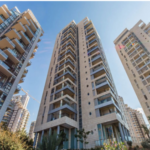
Contemporary residential LUDs – Israel
The vertical urban living in large residential developments that characterize many cities around the world generates a new urban experience. In this project, we examine the impact of these urban forms on various aspects of the everyday life such as security, anonymity, community, and social relations. Moreover, we examine the novel implications of this volumetric transformation of the urban landscape on how we understand the city as a whole.
Residential coexistence // Experiencing vertical living // Large-Scale Urban Developments and the Future of Cities // Urban Morphology and Qualitative Topology
Urban planning for diversity

Ben Gurion Blvd. Haifa
With an unprecedented number of immigrants entering cities, planning for diversity requires new understandings to inspire planning theory and practice. We approach planning for diversity through in-situ investigation of various urban sites in which social diversity and co-existence of otherwise in-conflict groups are successfully happening, and through investigation of how diversity is addressed, defined, and practiced in the contemporary planning discourse and new plans of intercultural cities.
Urban landscapes of fear and safety // Critical Pedagogy for the New Planner // Residential coexistence // Between Cultures of Natures and Communities of Knowledge
Theory building: Social and psychological dimensions of urban space
The urban experience is construed by the relations of behavioral, perceptual, and affective aspects to the physical form of the city. The investigation of these relations deeply explores urban constructs such as attachment, fear, and security, perceived scale, and identity that are important for practical and theoretical implications of urban planning.
Spatial routinization and a ‘secure base’ in displacement processes//Theorizing urban social spaces and their interrelations//A New Conceptual Framework for Understanding Displacement//Planning by Scale//Patterns of self-organization in the context of urban planning // Conceptualizing Urban Ontological Security // Social Sustainability // Individualization of Urban Struggles
Planning and community space
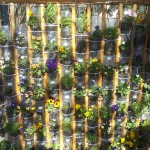
Nature museum garden, Jerusalem
This research explores the role of space and spatial practices in the development of political consciousness and activism. It focuses on the opportunity of underprivileged groups to take an active role in the production of urban space, informally and formally through planning procedures, while challenging the prevailing spatial arrangements predominantly determined by market forces, and offering alternatives.
In addition, the research focuses on role of community and public space in shaping the urban experience of individuals and groups and the new meaning of public space in the late modern city. Major concepts composing this line of research are sense of community, neighborhood satisfaction, trust, and community control and autonomy.
One Landscape, Multiple Meanings // Reframing urban controlled spaces // The Changing Meaning of Community Space // Actually Existing Commons
Perceptions of the natural environment

This research explores the connection between open space (urban and peri-urban) and
users-centered planning, mainly through the concepts of flexibility, publicness and participation in design of public settings. By using multi-culture perspective of people’s perception and usage of natural landscapes, the research offers a new and comprehensive understanding of ‘cultural ecosystem services’ and generate alternative approach for planning natural environment for cultural services.
Urban regeneration and the social aspects of urban change
This research explores community self-organized efforts for urban change on the one hand and top-down efforts of urban regeneration on the other hand. Urban regeneration strategies are being adopted worldwide sometimes regardless of their adequate fit to the specific locales. This research examines the complexity of global and local aspects of urban regeneration actions and policies, juxtaposing them against issues of social and spatial justice. With a focus on culture-led urban regeneration, self-organized community regeneration and principals of just urban development, this research offers a conceptual framework for understanding and investigating the different actors and conflicting agendas which are part of urban regeneration processes.
Reconstructing urban image through cultural flagship events // Planning with communities in regeneration projects // Political-economic urban restructuring: urban allotment gardens in the entrepreneurial city
In addition, the research explores the relations between gender and the development of civic capacity of residents in the process of planning with communities for urban regeneration and theoretical issues and practical aspects of residents planning for themselves in a centralized planning culture.
Qualitative methodology for planners
As part of the new roles of urban planners in the 21st century, a profession that is going through major reforms and is in need of new tools and techniques, this research focuses on theoretical, pedagogical and practical aspects of qualitative methodologies for planners and the potential contribution of qualitative tools to planning research and practice.
| Critical Pedagogy for the New Planner // Back to the (visualization) laboratory // Pedagogy for the new planner |
Examination of innovative technologies in planning
This research examines the use of innovative technologies in planning, with an emphasis on the use of advanced visualization technology. Using a one-of-its-kind visualization lab, this research explores methodological aspects of the use of the visualization lab, focusing on the utilization and contribution of this technological tool to ecosystem services.
The research also focuses on the implications of combining common qualitative methodologies such as focus groups and interviews with an advanced visualization technology and also on the usage of the emerging qualitative GIS tools for the examination and presentation of socio-spatial information.